
🧭 Network Audit & Infrastructure Validation – Braking Zone
Overview
Braking Zone is a multi-rig racing simulation environment with several interconnected systems, including racing rigs, a control PC, and networked infrastructure. I was brought in to investigate network behavior, validate a newly installed cable run, and prepare the system for adding an additional workstation/spectator PC.
The Challenge
Several open questions needed to be resolved before safely expanding the system:
- A newly installed Ethernet cable did not initially appear to function as expected.
- There was uncertainty around switch configuration, VLANs, and port behavior.
- The switch ports were not clearly mapped to individual devices.
- The system needed to be expanded without disrupting production racing rigs.
The key risk was making changes to a live system without fully understanding its structure.
Approach
I led a non-invasive, read-only audit of the network to build a clear model before making changes.
1. Direct Switch Access
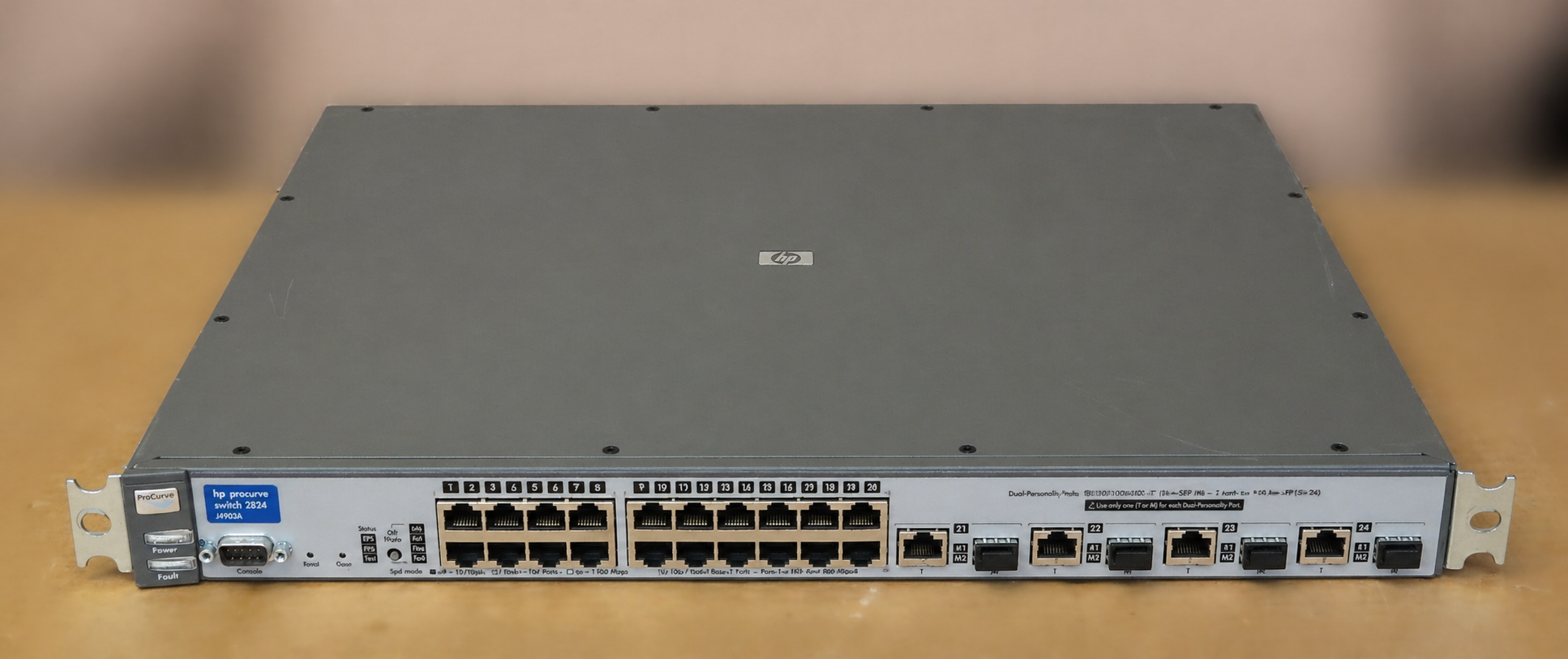
- Connected to the HP ProCurve switch via console access.
- Reviewed VLAN configuration, port status, and MAC address tables.
Basic switch-level inspection was performed to confirm VLAN and interface state:
show vlan
show mac-address
show interfaces brief
2. Port Mapping
- Identified switch ports corresponding to each racing rig.
- Mapped ports for the control PC and network uplink/router.
- Created a clearer port-to-device reference for future troubleshooting.
3. System Validation
- Powered on all racing rigs to observe live network behavior.
- Verified that devices were connected, active, and operating at expected speeds.
- Confirmed Gigabit connectivity where applicable.
Connectivity and routing were validated from the client perspective:
ip addr show
ip route
ping -c 3 8.8.8.8
Basic network checks were performed to confirm interface status, routing, and outbound connectivity.
4. Cable & Port Testing
- Tested an unused switch port using a laptop in an isolated context.
- Verified DHCP assignment within the expected network environment.
- Confirmed local network reachability and outbound internet access.
An isolated port test confirmed DHCP and gateway reachability:
dhclient -v eth0
ip addr show eth0
ping -c 3 192.168.1.1
Key Insights
- The production network was operating as a flat VLAN using VLAN 1.
- No switch misconfiguration was present.
- The newly installed Ethernet cable was functional.
- The initial issue stemmed from testing against the wrong network context, not from hardware failure.
- No segmentation or isolation was present between systems, reinforcing the need for careful change management in a shared network environment.
Outcome
- Confirmed network stability and correct configuration.
- Verified that all racing rigs were connected and operational.
- Identified and validated an unused switch port for expansion.
- Established a safe path for adding a new spectator PC.
Impact
- Reduced uncertainty around system behavior.
- Prevented unnecessary rework or risky configuration changes.
- Enabled future infrastructure expansion with less risk of downtime.
- Created practical documentation for future maintenance and troubleshooting.
Core Infrastructure
The network was centered around an HP ProCurve 2824 switch, which served as the primary point for port mapping, device validation, and infrastructure analysis.
The following diagram illustrates the actual network topology as it was observed during the audit.
Simplified flat LAN topology of the Braking Zone environment, with all systems connected as peers on a single VLAN (VLAN 1).
Tools & Technologies
- HP ProCurve 2824 switch
- Linux command-line tools
- DHCP / IP networking tools
- Console access for network hardware
- Live network validation in a production environment
Operational Principle
Real-world systems often appear unpredictable at first. In this case, the issue was not faulty hardware, but a mismatch between assumptions and the actual network structure. By mapping the system and validating each layer, the problem became clear and solvable.
Rather than making assumptions or changing configuration prematurely, I focused on understanding the system through observation, isolation, and validation. That approach ensured future work could be built on a clear and reliable foundation.
Availability
I’m currently available for contract or project-based work involving system validation, network troubleshooting, and infrastructure support—especially in environments where stability and careful change management are critical.
If you’re working with a live system and need a clear understanding of how it behaves before making changes, feel free to reach out.
Let’s put ourselves out there
I’m currently available for contract or project-based work involving system validation, network troubleshooting, and infrastructure support—especially in environments where stability and careful change management are critical.
If you’re working with a live system and need a clear understanding of how it behaves before making changes, feel free to reach out.