
GreatLynx Designs — WordPress Portfolio Platform
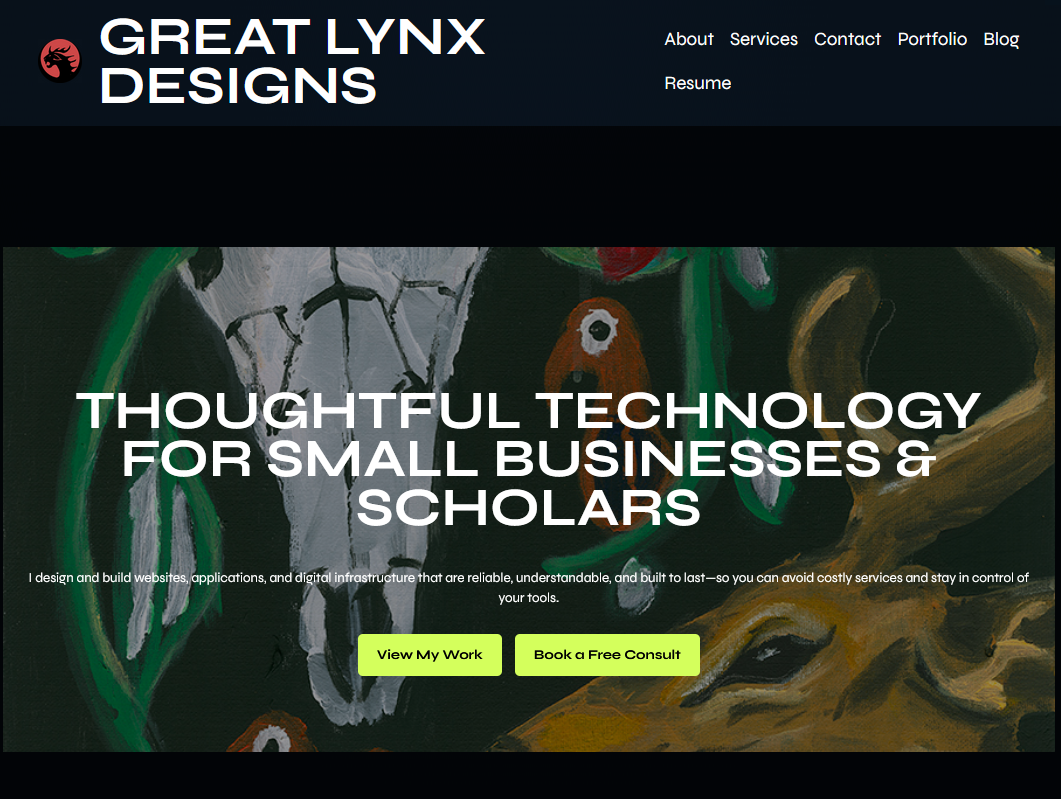
GreatLynx Designs is my personal WordPress platform and a working example of how I build, organize, and maintain content-heavy websites. The site brings together web development, software, design, documentation, and writing projects in one coherent system.
I use it as a practical testing ground for WordPress content architecture, reusable page patterns, portfolio navigation, media presentation, and long-term site maintenance. Rather than treating the site as a static portfolio, I designed it as a living platform that can grow as new work is added.
Project Context
This page documents GreatLynx Designs as a working WordPress portfolio platform. The site itself serves as both the artifact and the case study: a living system for presenting web development, design, software, documentation, and writing work.
Platform Highlights
Selected examples of how the platform supports scale, navigation, and depth:
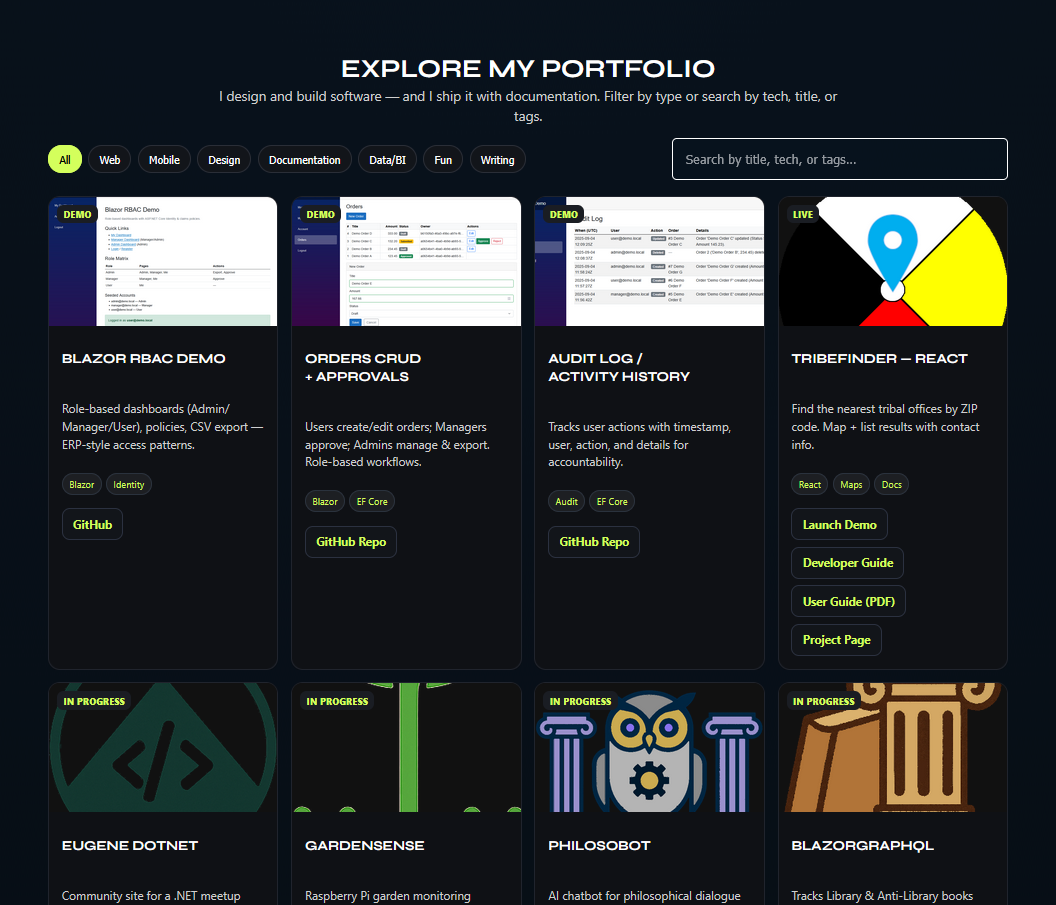
Filter + Search Browsing: Projects can be filtered by category and searched by title, technology, or tags. This reduces scroll fatigue and makes a large body of work navigable.
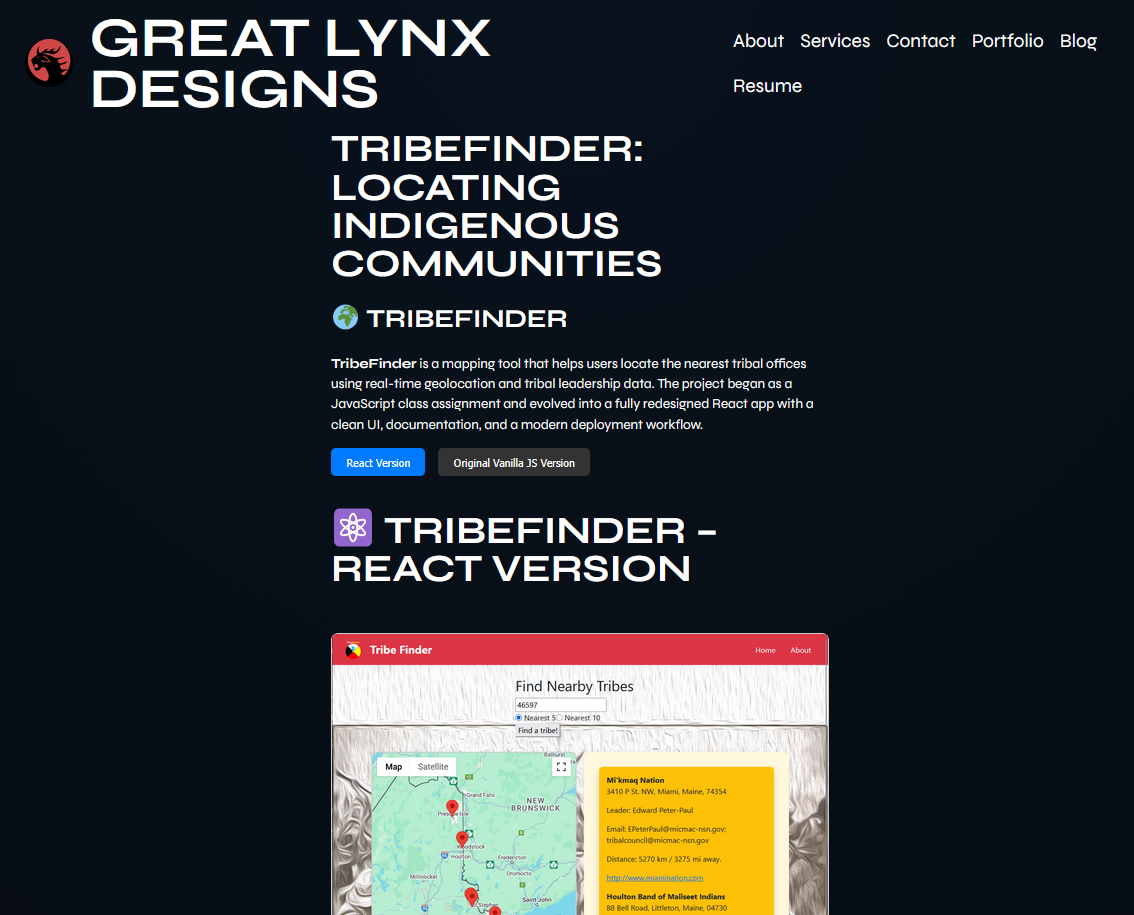
Structured Project Pages: Each project follows a consistent layout with screenshots, technical context, documentation links, and live demos where applicable.
What I Built & Maintain
- Designed a cohesive UI system that balances visual personality with professional clarity
- Built a tag-driven portfolio system with client- and recruiter-friendly browsing
- Designed patterns that minimize client confusion and reduce the need for custom one-off layouts
- Established reusable page patterns so new projects can be published efficiently
- Organized site navigation across About, Services, Portfolio, Blog, and Resume
- Maintained the platform through iterative improvements rather than one-off launches
- Kept structure SEO-aware with semantic headings and internal linking
Stack / Tools: WordPress (block editor), HTML, CSS, JavaScript, reusable layout patterns, media optimization workflow
Technical & Design Notes
- Content Architecture: Projects are tagged and structured to support filtering, search, and long-term growth.
- Performance Awareness: Images and media are selected and sized intentionally to avoid unnecessary page weight.
- User-Centered Thinking: Even as a personal site, decisions are made with real users in mind — clarity over cleverness.
Why This Matters
This project demonstrates more than the ability to assemble a WordPress site. It shows how I think about structure, maintainability, user flow, and long-term content growth — the same concerns that matter when building or improving a client site.
For clients, this means clearer navigation, reusable layouts, and a site that can grow without becoming confusing or difficult to maintain. For recruiters, it demonstrates practical WordPress experience across content architecture, front-end presentation, documentation, and iterative improvement.
Custom WordPress Development
The platform also serves as a testing and deployment environment for custom WordPress functionality. Rather than relying exclusively on third-party plugins, I selectively build lightweight custom solutions when they provide clearer behavior, reduced complexity, or tighter integration with the site’s goals.
- Custom AJAX-powered contact form system with spam mitigation and validation
- Reusable portfolio and layout patterns designed for scalable content management
- Iterative experimentation with filtering, navigation, and user flow improvements
These systems are developed and maintained in the same live environment used for the portfolio itself, allowing practical testing under real-world conditions rather than isolated demos.
Related work:
Building and Debugging a Custom WordPress Contact System
ColorBliss — Client WordPress Case Study