Great Lynx Designs — Custom WordPress Portfolio Platform
Project Overview
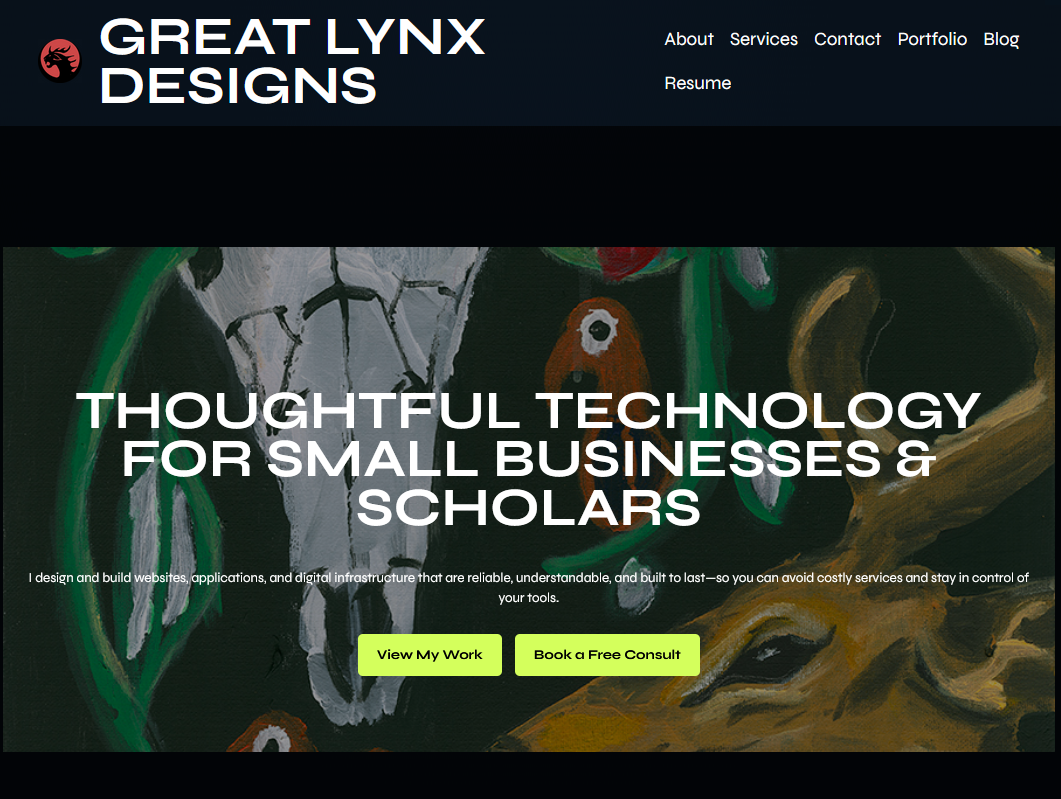
Great Lynx Designs is my professional website and an actively maintained WordPress platform for presenting software development, web design, technical documentation, illustration, and writing projects.
I designed and implemented the website using WordPress alongside custom HTML, CSS, JavaScript, and PHP functionality. Rather than treating the site as a static collection of portfolio entries, I developed it as an evolving platform for organizing, presenting, and documenting my work.
The platform combines a custom interactive portfolio interface, reusable project-page patterns, responsive layouts, and a separately developed WordPress contact plugin.
The Live Platform
The website itself is both the project and its working demonstration. Visitors interact with the navigation, project archive, individual case studies, and contact functionality described here.
Architecture and Technology
WordPress provides the content-management foundation, while custom frontend code handles presentation and interactive behavior where the site’s requirements call for it.
I use the Gutenberg block editor for page content and Custom HTML blocks for more specialized layouts and interactive components. This approach gives me direct control over markup and styling while retaining WordPress’s publishing and administration features.
The portfolio’s filtering interface is implemented directly in a WordPress Custom HTML block. It does not require a separate custom post type system, database query layer, or dedicated portfolio plugin.
Interactive Portfolio Development
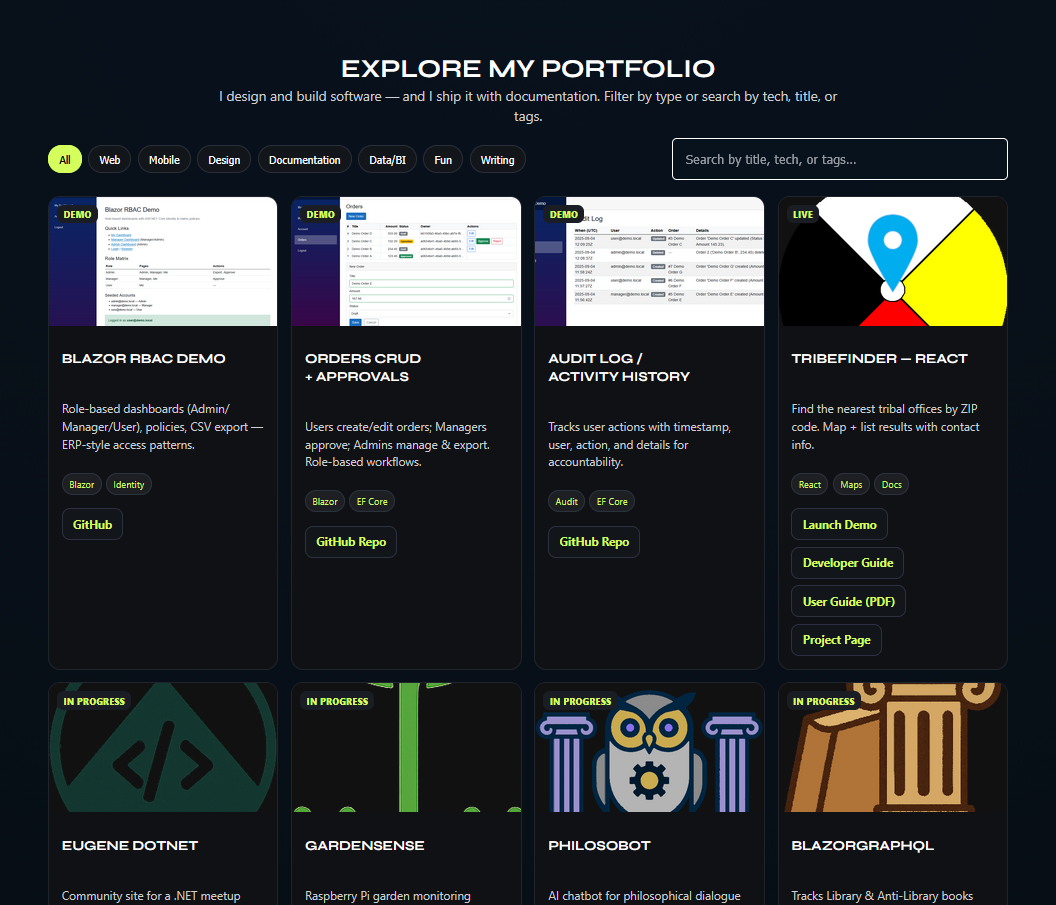
One of the platform’s central components is a custom-built portfolio interface designed to make a growing collection of projects easier to navigate.
I implemented the interface with HTML, CSS, and JavaScript, using project-card metadata to support client-side search and category filtering.
Portfolio Features
- A curated Selected Development Work section highlighting representative software projects.
- A Complete Project Archive preserving additional development, design, writing, and experimental work.
- Category-based filtering for exploring different kinds of projects.
- Text search using project titles, technologies, and descriptive metadata.
- Responsive project cards with thumbnails, technology tags, descriptions, and relevant links.
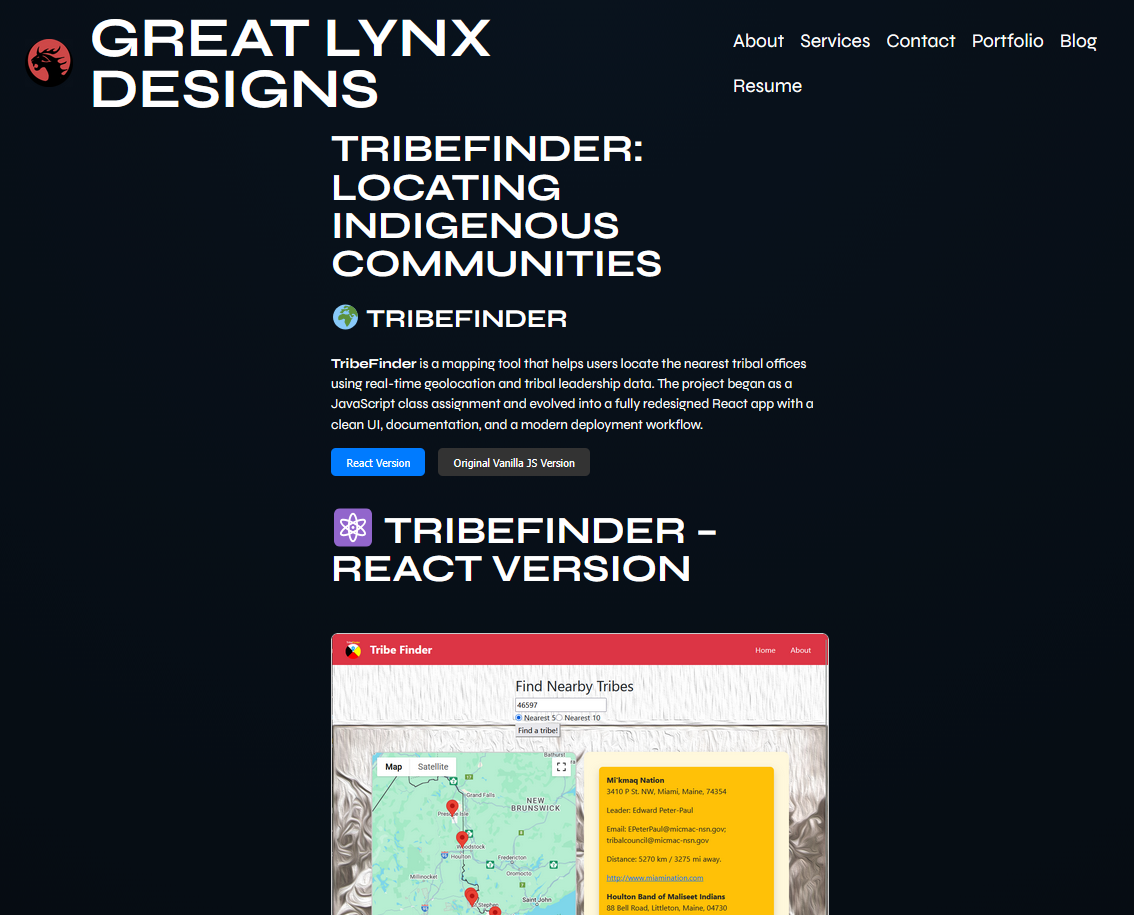
- Navigation between portfolio summaries and more detailed project case studies.
How Filtering Works
Project cards contain metadata describing their categories, titles, and technologies. JavaScript reads that metadata and determines which cards should be displayed in response to the visitor’s selected filters or search terms.
Because the project collection is manageable and I maintain it directly, this client-side approach provides the functionality I need without introducing additional server-side infrastructure.
Custom WordPress Plugin Development
In addition to the portfolio’s frontend components, I developed GLX Secure Contact, a custom WordPress plugin that handles contact form submissions.
Unlike the portfolio’s client-side filtering system, this functionality requires server-side processing and integrates directly with WordPress’s PHP APIs.
GLX Secure Contact
- Custom JavaScript and AJAX-based form submission.
- PHP request handling through WordPress AJAX hooks.
- Server-side validation and nonce verification.
- Honeypot detection, transient-based rate limiting, and optional reCAPTCHA.
-
Email handling through
wp_mail()and authenticated SMTP delivery.
Developing and maintaining the plugin also involved diagnosing a production issue in which browser autofill triggered honeypot detection and prevented legitimate messages from being delivered.
I documented the investigation, root cause, and correction in a separate technical case study.
Read the GLX Secure Contact Case Study
Content Architecture and Design
The platform accommodates several kinds of work, including web applications, WordPress projects, technical experiments, graphic design, illustration, and writing.
Rather than forcing every project into an identical presentation, I use consistent navigation and reusable layout conventions while allowing individual case studies to explain their particular technical or creative requirements.
Design and Maintenance Responsibilities
- Developed the site’s visual identity and responsive presentation.
- Organized navigation across the business website and project archive.
- Built reusable HTML and CSS patterns for portfolio cards and case studies.
- Structured technical documentation with headings, screenshots, diagrams, and related links.
- Maintained internal linking between related projects and technical work.
- Updated layouts and project content as the portfolio evolved.
Engineering Decisions and Tradeoffs
Choosing the Appropriate Level of Complexity
I deliberately implemented the portfolio interface inside a Custom HTML block rather than creating a dedicated WordPress plugin or custom post type system.
The project archive is a manageable size, I am its primary maintainer, and the interaction requirements are straightforward. A client-side implementation provides direct control over the interface without introducing unnecessary backend abstractions.
This approach does involve tradeoffs. Project data, presentation markup, and interaction behavior are maintained together, so updates require editing the underlying HTML.
For the site’s current requirements, that maintenance cost is acceptable. A more structured content model could become worthwhile if the archive grows substantially or multiple editors need to manage projects independently.
Custom Code Versus Third-Party Plugins
I use WordPress’s existing capabilities where they fit the requirements and develop custom functionality when a focused implementation provides greater control.
GLX Secure Contact is an example of functionality that benefits from dedicated PHP integration, while the portfolio’s search and filtering are appropriately handled by frontend JavaScript.
The goal is not to avoid plugins categorically, but to select an implementation approach proportionate to the problem.
Ongoing Development and Maintenance
Great Lynx Designs is a continuously maintained website rather than a one-time demonstration.
Recent improvements include reorganizing the portfolio around selected development work, refining individual project case studies, strengthening internal links, and improving how technical responsibilities are documented.
These changes are implemented in the same environment visitors use, making the site an ongoing exercise in frontend development, WordPress maintenance, and practical interface improvement.
What This Project Demonstrates
Great Lynx Designs demonstrates my ability to design, develop, organize, and maintain a content-rich WordPress website over time.
The platform combines custom frontend interaction, responsive design, content architecture, technical documentation, and PHP-based WordPress functionality.
It also reflects an engineering principle I apply more broadly: choosing solutions based on actual requirements and maintenance needs rather than introducing complexity simply because a more elaborate architecture is possible.